

 TH
TH JP
JP
For decades, passwords have served as the first line of defense for securing access to digital systems. Whether for email accounts, enterprise applications, online banking platforms, or social media services, passwords have long been the primary mechanism for user authentication.
However, the challenges associated with passwords have continued to grow. Weak passwords, password reuse across multiple accounts, phishing attacks, and stolen credentials have become increasingly common sources of security breaches.
As a result, major technology companies such as Microsoft, Google, and Apple have joined forces to promote a new authentication standard known as Passkeys. Widely regarded as a significant step toward a future without passwords, Passkeys are rapidly gaining acceptance as a more secure and user-friendly alternative to traditional password-based authentication.
What Is a Passkey?
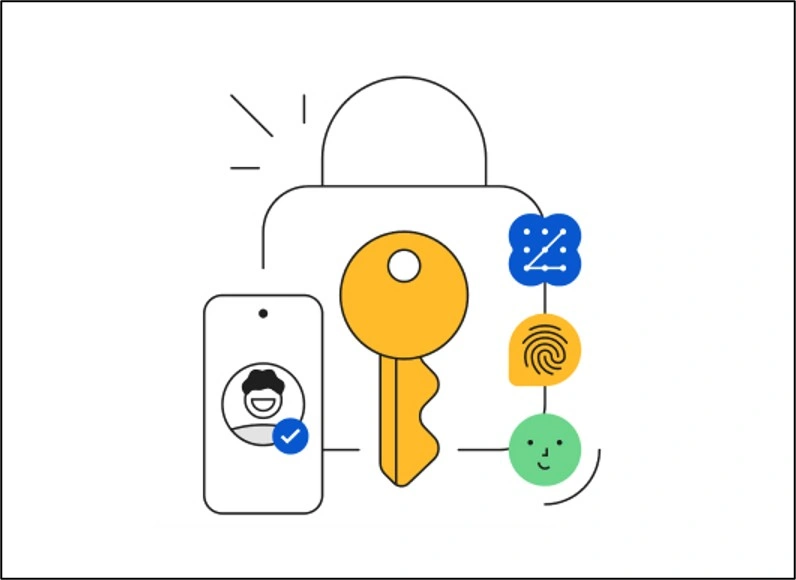
A Passkey is a modern authentication method that utilizes Public-Key Cryptography instead of relying on passwords that users must remember.
The Passkey system works by creating two cryptographic keys:
- Public Key – stored by the service provider.
- Private Key – securely stored on the user’s device.
When a user signs in, the device uses the Private Key to verify their identity with the server. No password or secret information is transmitted across the network during this process.
Simply put, users no longer need to remember complex passwords. Instead, they can authenticate using familiar methods such as:
- Fingerprint authentication
- Facial recognition
- Device PIN
- Windows Hello
- Touch ID or Face ID
These authentication methods are used to unlock the securely stored Private Key on the user’s device.
Why Have Passwords Become a Problem?
Although passwords have been the standard authentication method for more than 50 years, modern user behavior and evolving cyber threats have exposed significant weaknesses in password-based security.
1. People Cannot Remember Dozens of Passwords
Today, individuals often manage dozens or even hundreds of online accounts across business systems, personal services, mobile applications, and digital platforms.
As the number of accounts increases, users tend to reuse passwords or make only minor variations to make them easier to remember. Consequently, if one account is compromised, all other accounts using the same password may be at risk.
2. Phishing Remains a Major Threat
Phishing continues to be one of the most effective cyberattack techniques.
Attackers create fake websites that closely resemble legitimate services and use deceptive emails or messages to trick users into entering their usernames and passwords. Once credentials are entered, attackers can immediately gain unauthorized access to the victim’s account.
Despite significant investments in cybersecurity technologies, phishing remains successful because it exploits human behavior rather than technical vulnerabilities.
3. Password Management Is Expensive
For organizations, passwords create operational costs beyond security concerns.
Common password-related expenses include:
- Password reset requests
- Help Desk support
- Password policy enforcement
- Complexity requirement management
- Additional MFA administration
Many organizations find that password-related support consumes substantial IT resources and generates recurring costs year after year.
These challenges have prompted the technology industry to seek more effective methods of authentication.
Why Are Passkeys More Secure?
★ Built-In Protection Against Phishing
One of the greatest advantages of Passkeys is that authentication is tied directly to the legitimate website or service.
If a user visits a fake website, the Passkey system will not authenticate because the domain does not match the registered service. As a result, phishing attacks that rely on stealing passwords become significantly less effective.
★ No Passwords to Steal
Traditional passwords can be intercepted during transmission or stolen through various attack methods.
With Passkeys, no password is transmitted across the network. Consequently, attackers have no reusable credential to capture or exploit.
★ Reduced Impact of Data Breaches
Historically, when password databases were compromised, attackers could attempt to crack password hashes and gain access to user accounts.
In a Passkey-based system, providers store only the Public Key. Even if a database is breached, attackers cannot use the Public Key to sign in as the user.
★ Improved User Experience
Security is often associated with inconvenience, but Passkeys aim to improve both security and usability.
Traditional authentication may require users to:
- Enter a username
- Type a password
- Receive an OTP
- Complete an additional verification step
With Passkeys, users can often:
- Scan their fingerprint or face
- Confirm authentication
- Sign in instantly
The result is a faster, simpler, and more seamless login experience.
How Are Passkeys Different from MFA?
Many people assume Passkeys are simply another form of Multi-Factor Authentication (MFA), but they actually represent a fundamentally different approach.
| Aspect | Password + MFA | Passkey |
| Authentication Method | Requires a password | Passwordless |
| Phishing Risk | Still vulnerable | Naturally resistant |
| Memory Requirement | Users must remember passwords | No passwords to remember |
| User Experience | Multiple steps | Faster and simpler |
| Administration | Password-related management required | Significantly reduced |
In essence, MFA strengthens password-based authentication, while Passkeys aim to eliminate the need for passwords altogether.
The Impact on Organizations and Users
The adoption of Passkeys is much more than a change in login methods. It has broader implications for cybersecurity and digital transformation.
Benefits for Users
- No need to remember numerous passwords
- Reduced risk of account theft
- Faster and more convenient sign-in experiences
- Less concern about creating strong passwords
Benefits for Organizations
- Lower Help Desk costs
- Reduced credential theft risks
- Support for Zero Trust security strategies
- Improved employee and customer experiences
- Reduced likelihood of account takeover incidents
As organizations accelerate their digital transformation initiatives, Passkeys are emerging as both a security enhancement and a usability improvement.
The Future of a Passwordless World
Major technology providers and software developers are increasingly integrating Passkey support into their platforms and services.
At the same time, cybersecurity trends continue to highlight passwords as one of the most common weak points exploited in cyberattacks. This is driving organizations to reduce their reliance on traditional passwords and adopt more modern authentication methods.
While it may take several years before passwords disappear entirely, the direction of the technology industry is becoming increasingly clear. Future authentication systems will emphasize security that operates seamlessly in the background while minimizing complexity for users.
Passkeys are rapidly becoming a cornerstone technology in achieving the vision of Passwordless Authentication and creating a safer digital ecosystem.
Conclusion
Passkeys are more than just a new technology. They represent a fundamental shift in how identity verification is performed, moving from “something you know” to “something you possess.”
For individuals, Passkeys offer greater convenience, stronger security, and a simpler user experience. For organizations, they provide an opportunity to reduce cyber risk, lower IT support costs, and modernize authentication processes.
As cyber threats become increasingly sophisticated, transitioning toward a passwordless future is no longer merely an option. It is becoming a necessity for modern digital organizations. Passkeys are poised to play a central role in that transformation, helping create a more secure and user-friendly digital world.
Source:

