

 TH
TH JP
JP
Many organizations have invested heavily in developing critical systems, ranging from sales platforms and inventory management systems to specialized applications that support core business operations. However, as a result, as these systems grow alongside the business, their complexity inevitably increases.
In practice, a common challenge faced by many teams is the occurrence of incidents or user-reported issues. In such situations, the support or MA (Maintenance Agreement) team must spend significant time searching for information. Specifically, they need to look across multiple sources.
These include source code, databases, stored procedures, and API documentation. In addition, in some cases, they also need to consult experts who originally developed the system.
As a result, even with experienced teams, analyzing issues in large-scale systems remains time-consuming. Moreover, as systems age, valuable knowledge often becomes siloed within a small number of individuals, creating additional operational risks.
To address these challenges, AI Automation is helping organizations transform system maintenance from a manual and reactive process. Instead, it is becoming a more intelligent approach, where AI acts as a capable assistant that truly understands how the system works.
What is AI Automation
AI Automation refers to the use of artificial intelligence to automate tasks traditionally performed by humans. In addition, it is capable of thinking, analyzing, and supporting decision making to a certain extent. This stands in contrast to Robotic Process Automation or RPA, which strictly follows predefined rules and processes.
As a result, when this intelligent system accesses source code and databases, it can significantly improve the support process.
The key concept is enabling AI to learn from all critical components of the system, rather than relying solely on documentation. For example, these components include:
- Source code
- Database schema
- Tables
- Views
- Procedures
- Functions
- Triggers
- Scheduled jobs
- API specifications
- Technical documentation
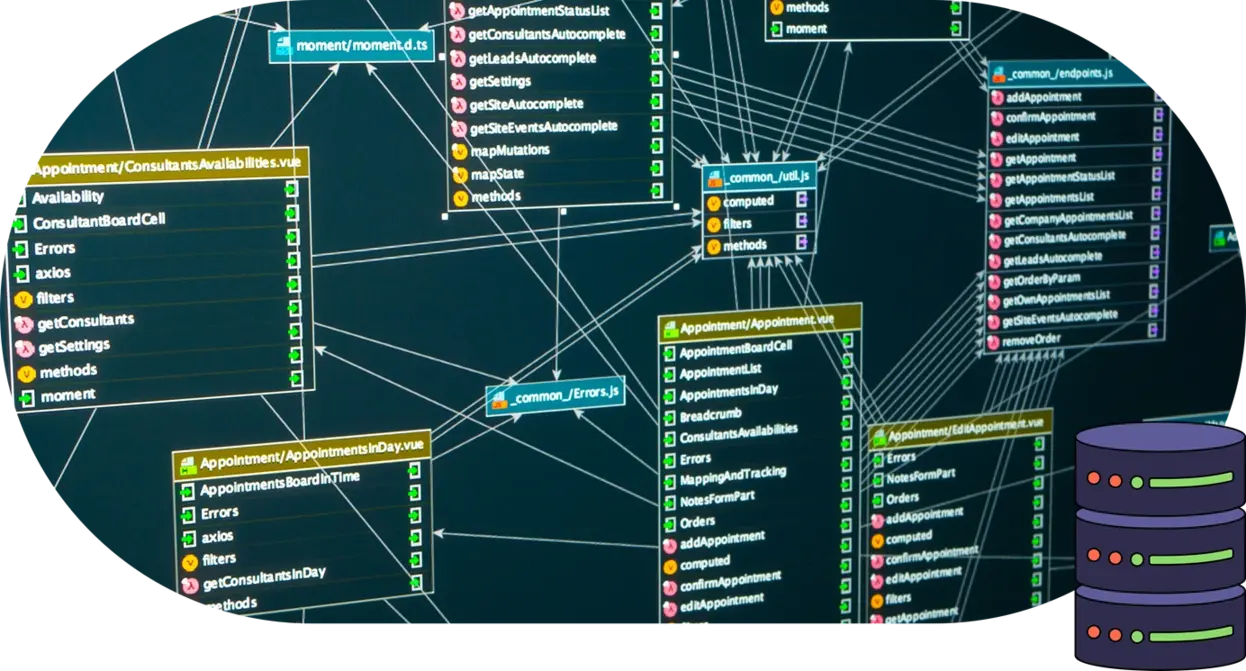
When all data is interconnected, the system can achieve a deep understanding of relationships within the application, such as:
- Which service is linked to each screen
- Which procedures are invoked by each service
- Which tables are updated by each procedure
- Which business processes are associated with each table
This capability enables the solution to function as a true technical assistant for the MA team.
More Than Answers : Intelligent Problem Analysis
AI Automation goes beyond simply answering questions. It supports the MA team from the moment an incident is reported.
For example, when a customer reports that “an order was not converted into an invoice,” the system can immediately investigate by checking:
- Whether the system successfully recorded the transaction
- Which step in the process the system interrupted
- Which procedure encountered an issue
- Whether the system executed related jobs successfully
- Which API generated an error
- Where the potential root cause lies
The system performs all of these checks without requiring the MA team to manually search across multiple systems.
As a result, it reduces analysis time from several hours to just a few minutes.
Real-Time Access to Live Data
One of the key advantages is the ability to connect directly to the database and query live data under controlled access permissions. This allows teams to verify information in real time, including:
- Transaction status
- Process logs
- Document records
- Queue status
- Interface logs
- Failed records
By leveraging actual system data, teams can respond to customer inquiries with accuracy and confidence, rather than relying on assumptions.
Knowledge That Stays with the Organization
Many organizations face the same challenge: a few key individuals often hold critical knowledge. When those individuals leave or change roles, the organization loses valuable system knowledge.
AI Automation helps address this issue by consolidating knowledge into a centralized knowledge base, including:
- GitLab repositories
- Database schemas
- API documentation
- Support history
- Incident records
This approach transforms knowledge into a lasting organizational asset, rather than something dependent on specific individuals.
Faster Onboarding for New Team Members
For MA teams that are expanding or onboarding new staff, learning a large and complex system can take significant time.
This solution greatly reduces the onboarding period by enabling new team members to find answers instantly, such as:
- What a specific module does
- How a procedure relates to the business flow
- Whether a particular error has occurred before
- Which screen connects to a specific API
- Which table a given field originates from
As a result, new team members can become productive more quickly, without having to rely on senior staff at every step.
Supporting Long-Term Business Growth
As systems continue to grow, the number of incidents and support cases increases accordingly. Simply expanding the support team may not be sufficient, especially when knowledge remains fragmented across individuals and systems.
AI Automation enables organizations to scale system maintenance more effectively by acting as a centralized access layer to all relevant knowledge. This allows teams to handle a growing workload efficiently, without increasing operational complexity or recurring manual effort.
Get Started with Smarter MA Today
AI Automation is no longer a concept of the future. It is a practical solution that organizations can adopt today to transform system maintenance from a manual process into one that is more intelligent, faster, and more accurate.
When systems fully connect and understand source code, databases, and APIs, they can act as intelligent assistants for MA teams. This enables faster problem analysis, instant data retrieval, and real-time decision support. The system now completes tasks that once required hours in just minutes. At the same time, it consolidates system knowledge into a centralized repository, reducing dependency on individuals.
In addition, AI Automation helps organizations build a Technical Intelligence Layer on top of existing systems. This enhances support efficiency, improves SLA performance, and ensures the system can scale effectively to support long-term business growth.
If your organization is looking to reduce resolution time, improve team agility, and establish a sustainable knowledge base, AI Automation is the solution you can start with today.
iCONEXT is ready to support you in bringing this concept into real-world implementation.
Contact us at thaisales@iconext.co.th or submit your details via the Inquiry Form to get started.

