

 TH
TH JP
JP
Google Code Wiki is an AI-native platform that turns the tedious task of writing source-code documentation into a self-maintaining knowledge base.
In the software world, everything moves fast and no one waits. Nearly every team runs into a major challenge: technical debt. Most of the time, it doesn’t come from “bad code”. Instead, it comes from something much simpler and more costly. It’s the time and effort required to read and understand legacy code.
That’s why Google introduced Code Wiki, a new tool that uses AI to automatically organize and generate documentation for source code. It replaces manual write-ups with a structured knowledge system that stays continuously up to date.
The goal is straightforward. It’s not to replace developers, but to remove friction from everyday work. It helps senior engineers grasp new libraries in minutes and enabling new team members to ship their first code from day one.
The Three Pillars of the Code Wiki Revolution
Code wiki is not a traditional wiki. From day one, it is designed to be intelligent, automated, and integrated.
1. Automation: Documentation updates in real time with the source code
A classic documentation problem is that it falls out of sync. Developers update the source code but forget to update the docs, leaving inaccurate or outdated information.
Code wiki addresses this by integrating documentation directly into the CI/CD* pipeline. Every time the source code changes, the system scans the entire repository and automatically regenerates the documentation.
The result is documentation that always matches the actual state of the code (the current Git HEAD), making it one of the most reliable sources of information for the team.
*What is CI/CD?
CI (Continuous Integration) is the practice of frequently merging code into a shared repository. It uses automated builds and tests to detect issues early. It also helps reduce development errors.
CD (Continuous Delivery) ensures tested software is always in a deployable state by automating build, test, and release preparation. However, the actual production deployment typically still requires manual approval or an explicit deployment action.
2. Intelligence: A chat experience that truly “knows your source code”
At its core, code wiki includes a Gemini-powered chat interface. This isn’t a generic AI chatbot but it’s a model that can read and understand your entire codebase.
You can ask highly specific questions, such as:
- Where is this function called?
- What data does this module take in and send out?
- If I change this part, what else will it affect
Because the AI answers using a continuously updated Wiki, its responses are more accurate and significantly less prone to LLM-style* “hallucinations” (made-up or incorrect answers).
*What is an LLM (Large Language Model)?
An LLM is an AI model trained on large-scale data to understand and generate human language.

3. Integration: Reducing context switching between source code and documentation
Another key advantage is that every answer and every article in the wiki can link directly to the actual source code files. This means you can read an explanation and jump to the relevant code with a single click.
It eliminates the usual back-and-forth of “read the doc, guess the file, search for it, open it, and scroll to the right line”. Instead, documentation and code review become a single, streamlined workflow.
Understanding complex logic like an experienced developer
What truly sets code wiki apart is its ability to identify and map complex relationships within a codebase. It presents those relationships in a way that’s easy to understand.
✔ Automatically generating diagrams from source code
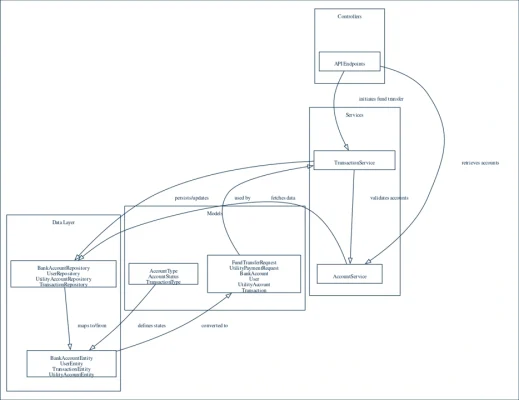
For large systems with many components or classes, code wiki can automatically generate diagrams and update them whenever the code changes, such as:
- Architecture Diagram
- Class Diagram
- Sequence Diagram
This makes it especially useful for teams doing reverse engineering or taking over maintenance of large, existing systems.
✔ Supports Stored Procedures (SPs) and database logic
Code wiki doesn’t just understand application source code. It can also interpret database stored procedures, which is a major pain point for many organizations.
- Stored procedures are source code too, with IF statements, WHILE loops, and complex business logic.
- Code wiki can analyze SPs and link them to the related application source code.
- It can also generate sequence diagrams showing when the application calls SPs and how those calls affect the data.
This makes it much easier to understand the overall system flow end to end.
Usage strategy: From open source to enterprise
Code wiki is currently available as a public preview and initially supports public repositories. However, Google is preparing to release what many enterprises have been waiting for: the Code Wiki Gemini CLI Extension.
This CLI extension will allow companies to run code wiki within their own environment without sending source code outside the organization. It’s especially well suited for large enterprises with strict policies around source code confidentiality.
Conclusion
Code wiki represents one of the biggest shifts in how we document and explain source code in years. Traditional documentation becomes outdated quickly. It also depends heavily on manual updates. Code wiki moves teams toward a self-updating knowledge system. This system can answer in-depth questions instantly.
It is another major step aligned with Google’s mission to “organize the world’s information”. It focuses on what matters most to developers. That is your source code.
Source:

