

 TH
TH JP
JP
In today’s rapidly changing world, organizations must continuously adapt and evolve. At the heart of this transformation lies a key asset: human capital. The human brain is the central engine driving thought, decision-making, and action. Understanding and unlocking the brain’s potential has become essential to effective management in the modern era.
Neurotechnology is playing an increasingly vital role in analyzing, developing, and enhancing individual capabilities. It supports everything from improving work performance and learning capacity to emotional regulation and even more systematic, accurate pre-employment screening. These advancements are quickly becoming indispensable tools for boosting organizational effectiveness on a broader scale.
Everything Starts with the Brain
The human brain is a complex network of interconnected systems, each responsible for receiving, transmitting, and processing information from neurons into signals the body can interpret and act upon. It governs movement, perception, thought, emotion, and memory which are core elements that directly impact employee productivity and organizational performance.
In today’s business environment, cognitive abilities are central to analysis, planning, and strategic decision-making. While brain development can be fostered through activities like reading, listening, and critical thinking, these traditional methods require time and consistency.
Modern Neuroscience Technology: Enhancing Brain Function
Today, neuroscience technologies offer more efficient ways to strengthen brain performance. They improve memory, concentration, learning capacity, and problem-solving. These are critical factors that help employees work more effectively and boost organizational success.
Moreover, these technologies support human resource management by enabling cognitive profiling, preliminary personality assessments, behavioral risk screening, and even early detection of neurological issues. Such tools help reduce hiring risks and enable more precise, structured talent management.
Examples of Neurotechnology
1. Brain-Machine Interfaces (BMIs)
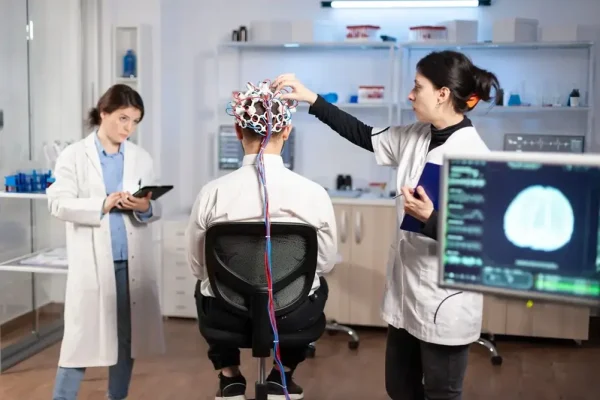
BMIs connect the human brain to computers by translating neural signals into commands that control various devices. This includes implanting electrodes in the brain or using EEG headsets to detect brainwaves and control robotic limbs, communication aids, or automated systems. These technologies are especially beneficial for individuals with mobility or communication impairments.
Read more: Brain-Computer Interfacea technology to let you communicate by just thinking
2. Neuroimaging Tools
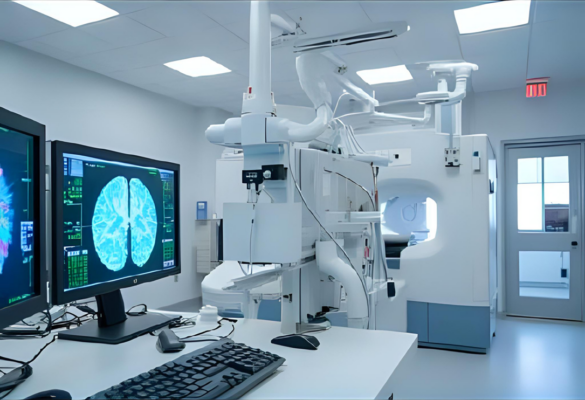
Neuroimaging technologies analyze brain structure and function, helping detect abnormalities, diagnose neurological disorders, and observe brain responses during activities like memory tasks, calculations, or emotional regulation. These tools fall into two main categories:
- Structural Imaging Provides detailed anatomical views of the brain, including shape, size, and tissue density. These are essential for diagnosing conditions like tumors, brain hemorrhages, atrophy, or trauma. Common technologies are MRI (Magnetic Resonance Imaging) and CT scan (Computed Tomography).
- Functional Imaging Shows real-time brain activity during tasks such as thinking, speaking, or remembering. These methods not only visualize brain structure but also track changes in blood flow, energy use, or electrical signaling between neurons. Tools include fMRI (Functional MRI), PET (Positron Emission Tomography), and EEG (Electroencephalography).
3. Neuromodulation
This technology focuses on adjusting neurotransmitter levels to stimulate or suppress specific neural activities. Its goal is to restore, enhance, or rebalance brain functions. This benefits cognition, emotional regulation, and mental performance.
Neuromodulation can involve electrical stimulation, magnetic pulses, or targeted pharmaceuticals to regulate key neurotransmitters:
- Norepinephrine
Enhances alertness, attention, and learning. Balancing this chemical improves information retention and response speed. These abilities are critical in high-focus environments. - Dopamine
Involved in motivation, behavior regulation, and decision-making. Proper dopamine levels support concentration, rational thinking, and a sense of reward. - Serotonin
Regulates mood, anxiety, and mental stability. Low serotonin is linked to depression and anxiety, while optimized levels promote emotional well-being and relaxation.
Neuromodulation is no longer confined to clinical use. It is also a powerful tool for organizations to enhance employee potential. It helps boost focus, stress resilience, and sustainable learning and performance.

Conclusion
Integrating neurotechnology into organizational strategies empowers companies to manage human resources more effectively. Whether applied to brain performance analysis, early disorder detection, or precision hiring, these tools minimize risks, enhance decision-making, and support long-term strategic growth.
By developing talent through these innovations, organizations foster creativity, increase competitiveness, and unlock sustainable productivity in a fast-evolving world.
Source:
Neurotechnology, how to reveal the secrets of the human brain?
Neurological Enhancement Will Alter Your Business — and Your Workforce
Neurotechnologies and Neurological Enhancement: Unlocking Capabilities Beyond Reach
Neuroimaging: Brain Scanning Techniques In Psychology
Image by freepik

